Focused service
Reduce absenteeism and regain control of workforce performance
High absenteeism affects output, increases overtime, places strain on supervisors, and creates ongoing instability in labour-intensive operations. Many businesses respond tactically and repeatedly, but without addressing the underlying causes, the pattern continues.
Our approach starts from a different premise: absenteeism is often a system problem, not only a people problem. Where attendance breakdowns become chronic, the causes usually include weak controls, inconsistent management response, poor reporting, misaligned incentives, or operational conditions that allow absence to become normalised.
We work with management to identify the root causes driving absenteeism, design a practical response, and implement systems that improve attendance discipline and workforce stability over time.
What this can help resolve
- Ongoing attendance instability affecting production or service delivery
- High levels of reactive overtime or short-notice resourcing changes
- Inconsistent supervisory response to absenteeism
- Weak attendance reporting, control, or escalation systems
- Rising frustration without sustained improvement
What persistent absenteeism usually costs
What persistent absenteeism usually costs the business
Lost output
Absence reduces production capacity and puts delivery commitments at risk.
Cost pressure
Overtime, reallocation, and disruption add avoidable operating cost.
Instability
Supervisors and managers are forced into reactive short-term decisions.
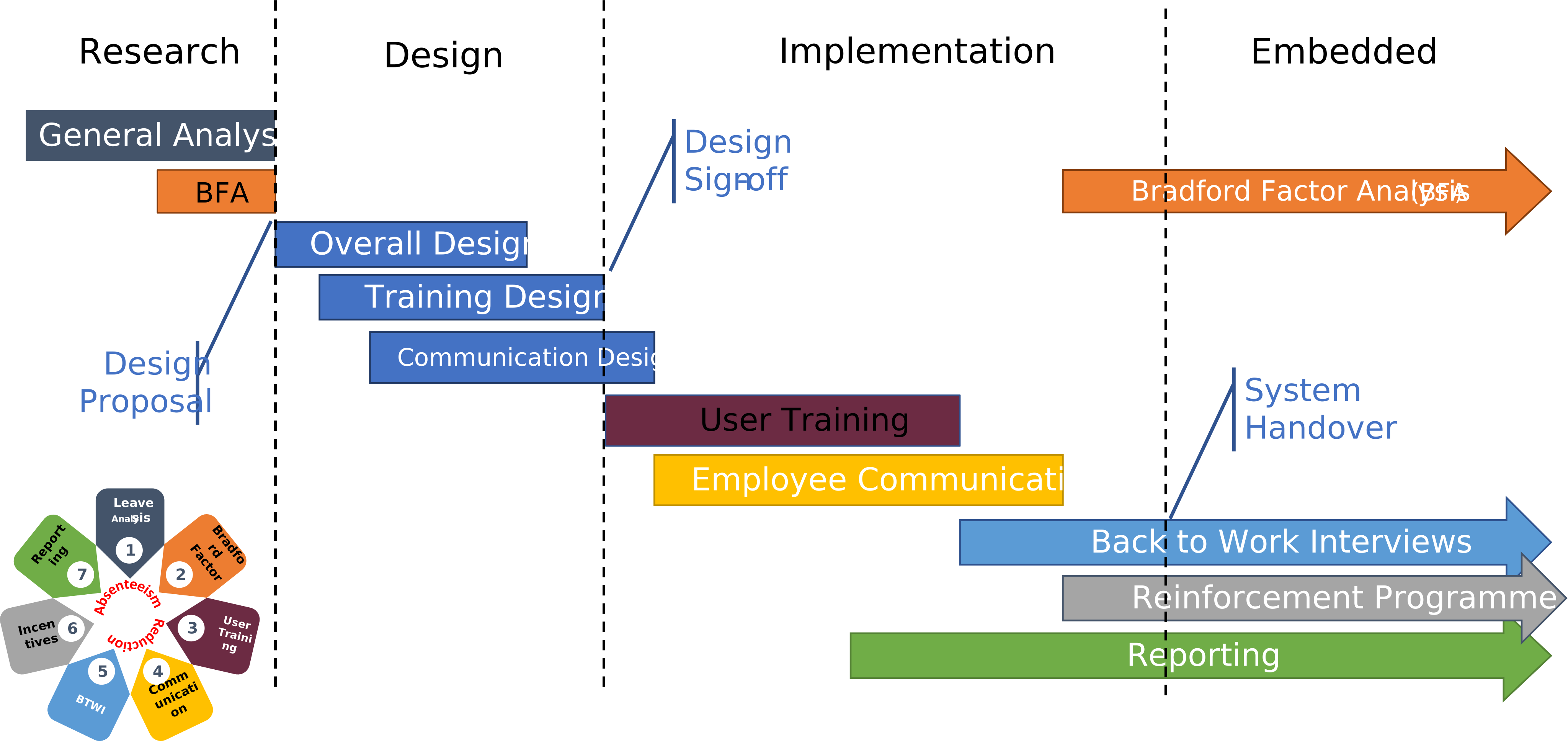
Method
A structured intervention
01
Diagnose the causes
Review attendance patterns, reporting practices, supervisory controls, management routines, and operational conditions to isolate the real drivers of absenteeism.
02
Design a practical response
Develop measures that are workable within the business: clearer controls, improved escalation, better management discipline, and systems that support attendance accountability.
03
Support implementation
Help management embed the intervention so it becomes part of the operating system rather than a short-term campaign.
Expected outcomes
- Reduced absenteeism rates
- More stable staffing and shift coverage
- Lower operational disruption
- Better production predictability
- Stronger management control over attendance
Who this is for
This work is particularly relevant for labour-intensive businesses, manufacturing environments, and operations where absenteeism directly affects service, throughput, output quality, or management capacity.
Where absenteeism has become an ongoing operational problem rather than an isolated HR issue, a structured intervention can materially improve performance.
Discuss your absenteeism challenge
If absenteeism is affecting output, stability, or management capacity, a structured intervention can help restore control.
Implementation Framework
How the absenteeism intervention works
A structured process to identify root causes, design the right response, and support implementation until attendance control improves.
Step 1
Diagnose
Review attendance patterns, shift instability, reporting practices, supervisory controls, and management routines to isolate the underlying drivers of absenteeism.
Step 2
Design
Develop a practical intervention with clearer controls, escalation points, management discipline, and systems that support sustainable attendance accountability.
Step 3
Implement
Work with management to embed the intervention into the operation so it becomes part of the business rhythm rather than a temporary initiative.
Project Outline
Structured overview of the absenteeism intervention process.